Summer Bedtime: What to Do When It's Still Light Outside
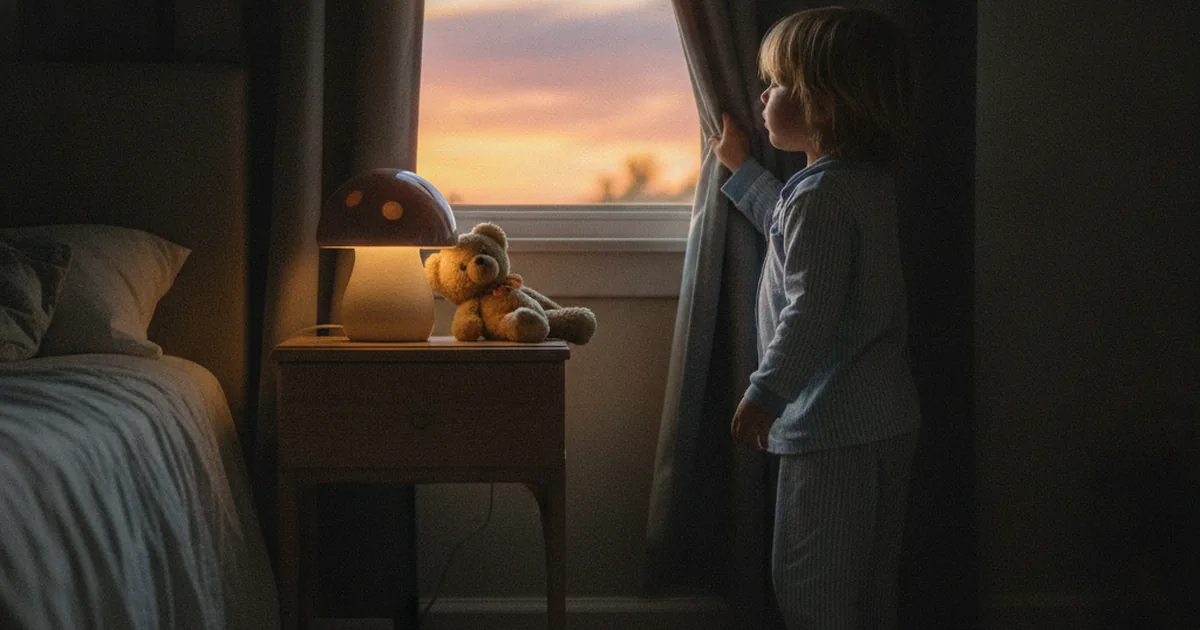
Every June through August, the same message shows up in parenting groups: “My kid won’t go to bed because it’s still light outside.” It’s one of the most predictable seasonal sleep disruptions there is, and it’s not really a discipline problem or a stubborn-kid problem — it’s a light problem. Your child’s internal clock takes its cues from what their eyes see, and a bright sky at 7:30 pm is a genuinely confusing signal to a body that’s supposed to be winding down. The fix isn’t to argue with the calendar; it’s to manage the light and keep the routine steady.
Why is bedtime harder when it's still light outside?
Light is the single strongest input your child’s circadian rhythm uses to tell day from night. In dim conditions, the brain starts releasing melatonin in the evening, which makes kids feel sleepy and ready to wind down. Bright light — including ordinary daylight streaming through a window — suppresses that release. So on a long summer evening, your child isn’t just being difficult when they insist they’re not tired; their body is getting a genuine signal that it isn’t nighttime yet, layered on top of the very reasonable protest that the sky looks nothing like bedtime.
Should we push bedtime later since it's still light outside?
A little, but not by much. Shifting bedtime 20-30 minutes later in summer is a reasonable compromise that many families find cuts down on nightly battles, since it lines up slightly better with how light and alert your child feels. The trap is pushing it further, because your child’s actual sleep need doesn’t change with the season — a 4-year-old needs roughly the same hours of sleep in July as in January. Push bedtime back an hour or more chasing the daylight, and you’ll usually see it show up somewhere else: earlier wake-ups, more overtired evenings, or a harder time settling the following night. Knowing your child’s real sleep need by age makes it easier to hold a sensible line.
Do blackout curtains actually help?
For most families, yes — it’s the highest-leverage single change you can make. A properly darkened room removes the visual evidence that it’s still daytime and lets melatonin rise closer to its usual schedule, even while the sun is technically still up outside. You don’t need an expensive setup: real blackout-lined curtains work best, but a clip-on blackout shade, a dark sheet pinned over the rod, or even foil-and-painter’s-tape over the glass in a pinch will noticeably dim a sun-facing room. The goal is a room dark enough that you can barely see your hand in front of your face — anything less still lets meaningful light through.
How much does evening light really affect a child's melatonin?
More than most parents expect. A well-known study of preschool-age children found that exposure to ordinary room light in the hour before bedtime suppressed melatonin onset by close to 90%, compared to dim light, and shortened how long the melatonin signal lasted overall. Children also appear to be more sensitive to light’s effect on melatonin than adults are. That combination is exactly why a bright summer evening hits bedtime so hard — it’s not a small nudge, it’s a strong signal working directly against the one you’re trying to send. (For the bigger picture on melatonin and kids, including when a supplement might come up, see our guide to melatonin in children.)
What's a good wind-down routine for long summer evenings?
Start creating “evening” artificially, about 30-45 minutes before the bedtime you want. Close the blackout curtains before the room actually needs them, switch off bright overhead lights in favor of one warm lamp, and trade outdoor play or a bright screen for something calmer indoors. Keep the sequence itself boringly consistent — bath, pajamas, teeth, a quiet story — because a predictable routine gives your child’s body reliable cues even when the sky outside hasn’t caught up. An audio story instead of a bright screen in these final minutes helps too, since screens push more light directly at your child’s eyes right when you’re trying to dim things down; audio winds a child down where a screen tends to wind them up.
What about bedtime on a summer trip, when we can't control the light?
Pack a portable blackout solution before you need it, not after the first sleepless night. A travel blackout blind with suction cups, or a roll of painter’s tape and a couple of black trash bags over a window, will out-darken almost any hotel or rental curtain, which are rarely made with a child’s bedtime in mind. Beyond the light itself, keep everything else about the routine as familiar as you can — same order of bath, book, and lights-out, same white noise or story audio — since a recognizable routine does real work even in an unfamiliar room. Our guide to bedtime while traveling covers the rest of what tends to go sideways on the road.
Give any of these changes 5-7 nights before deciding whether they’re working; a body that’s adjusted to long, bright evenings needs a little time to shift back. This is general parenting guidance, not medical advice; talk with your pediatrician if sleep problems are significant or ongoing.
Frequently asked questions
Why is bedtime harder in summer when it's still light outside?
Light is the strongest signal your child’s brain uses to decide whether it’s day or night. When the sun is still up at bedtime, it suppresses the release of melatonin, the hormone that makes kids feel sleepy, and it also gives your child visual proof that the day isn’t over yet, which makes protests like “but it’s not dark!” both biologically real and hard to argue with logically.
Should we push bedtime later in summer since the sun sets later?
A small shift of 20-30 minutes later is reasonable and often reduces bedtime battles, but pushing much further usually backfires because most children’s total sleep need doesn’t change with the season. If bedtime creeps too late, the missing sleep tends to show up as early wake-ups, overtired meltdowns, or a harder time falling asleep the following night, so it’s better to keep the shift modest and control light instead.
Do blackout curtains actually make a difference?
Yes, for most families they’re the single highest-leverage change. Darkening the room removes the visual and biological cue that it’s still daytime, which lets melatonin rise closer to its normal schedule even if the sky outside is still bright. Even simple foil-and-tape blackout panels or a clip-on shade over a window can make a noticeable difference within a few nights.
How much does evening light really affect melatonin in kids?
Research on preschoolers has found that even ordinary room light in the hour before bed can suppress melatonin onset by nearly 90% and shorten the overall melatonin window, compared to dim light. Children also appear to be more light-sensitive than adults, so the bright, lingering daylight of a summer evening has an outsized effect on how ready their bodies feel for sleep.
What's a good wind-down routine for long summer evenings?
Start dimming the environment about 30-45 minutes before bedtime: close blackout curtains, switch off overhead lights in favor of a single warm lamp, and swap outdoor play for a calmer indoor activity. A short, consistent sequence, such as bath, pajamas, and a quiet audio story, gives your child’s body the same cues it would get in winter, even though the sky outside hasn’t caught up yet.
What about bedtime during a summer trip when we can't control the light?
Pack a portable blackout solution, like a travel blackout blind or even thick trash bags and painter’s tape over a window, since hotel and rental curtains are rarely dark enough. Keep the rest of the routine as close to normal as you can (same bath-book-lights-out order, same calming sounds), because a familiar routine does a lot of the work even when the room and the light are unfamiliar.
Sources
Sleep Foundation — How Light Affects Sleep.
National Institutes of Health (PMC) — Exposure to Room Light before Bedtime Suppresses Melatonin Onset and Shortens Melatonin Duration in Children.
American Academy of Pediatrics (HealthyChildren.org) — Healthy Sleep Habits: How Many Hours Does Your Child Need?.
Sleep Foundation — Do Blackout Curtains Actually Help You Sleep?.