Screens vs. Audio Stories: What Actually Protects Your Child's Attention Span?
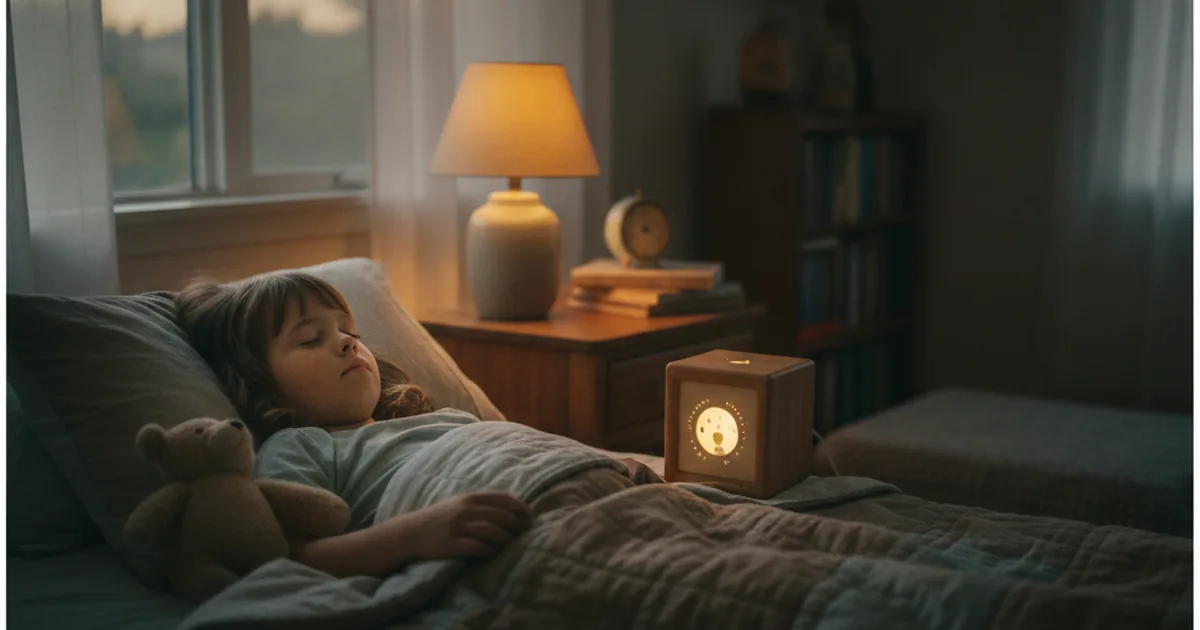
Every parent has had the moment: you turn off the show and your child looks glazed, jumpy, and somehow less able to focus than before you turned it on. That's not your imagination. A growing body of research links fast-paced, high-stimulation screen content with shorter attention spans and weaker self-regulation in young children — and it points to audio as one of the more attention-friendly alternatives, particularly in the last stretch before bed.
Does screen time actually shorten kids' attention spans?
The honest answer is nuanced: it's not screens themselves, it's the pacing and format of what's on them. Studies of preschoolers who regularly watch fast-paced, edited-for-novelty content (frequent scene changes, sound effects, constant new stimuli) show more attention and executive-function difficulties than peers who watch slower-paced or no screen content. The working theory is that a brain repeatedly exposed to "something new every few seconds" starts to expect that pace everywhere — so a quiet classroom, a slow-moving story, or an unstructured play session starts to feel understimulating and hard to stick with by comparison.
Why would an audio story be different from a screen show?
Audio removes the part of the experience doing the imagining for the child. When a screen shows a dragon, the child's brain just receives it; when an audio story describes a dragon, the child has to build it — the shape, the color, the way it moves — and hold that mental picture while the story keeps going. That's a genuinely different cognitive task, closer to reading a book than to watching TV, and it exercises sustained, self-directed attention rather than passive reception. There's also no visual track cutting between scenes every few seconds to reset the child's focus; a good audio story asks a child to stay with one continuous thread for the length of the story, which is exactly the muscle that fast-cut screen content tends to under-use.
Is background TV as harmful as a child directly watching?
It's easy to assume a show playing quietly in the background while a child builds with blocks doesn't matter much — but research on "background television" has found it measurably shortens the length and quality of children's focused play, likely because the flashing light and shifting sound keep pulling attention back toward the screen even when the child isn't actively watching. This is one of the more underrated advantages of audio: a story playing in the background doesn't have the same visual pull, so it's far less likely to fragment whatever else a child is doing in the room.
Is this just another "screens are bad" argument?
No — plenty of screen content is genuinely valuable, and this isn't about banning TV. It's about recognizing that the hour before bed is a uniquely bad time for high-stimulation media, both for falling asleep and for the attention "training effect" described above. Screens before bed also interfere with melatonin and sleep onset, which compounds the problem: a child who's both overstimulated and under-slept is going to struggle with focus the next day for two separate reasons. Swapping the last 20-30 minutes before lights-out for something slower-paced is one of the highest-leverage changes available, precisely because it's a small window with an outsized effect on both sleep and attention.
How to build an audio-first wind-down without a fight
- Set the swap as the default, not a negotiation. "After bath, we listen to a story" works better as a fixed part of the routine than as a nightly choice between TV and audio.
- Pick calm, narratively coherent stories. Frenetic, joke-a-second audio offers fewer attention benefits than a gentle story with a clear beginning, middle, and end.
- Keep the room screen-dark. No show playing "just for background noise" — a small speaker or headphones, lights low, nothing to look at.
- Let the story run to its natural end. Resist pausing to add visuals (a picture book alongside it) every night; some sessions of audio-only listening are what build the sustained-attention habit.
- Give it two weeks before judging. Attention habits built up over months of screen exposure don't reverse in a single bedtime — consistency matters more than any single night.
What age is most sensitive to screen-related attention effects?
The research signal is strongest under age five, when attention regulation and executive function are still developing rapidly. The American Academy of Pediatrics recommends avoiding screen media (other than video chatting) for children under 18-24 months, and limiting high-quality programming to about an hour a day for ages 2 to 5 — guidance rooted directly in this window being when attention habits are most malleable. Older children aren't immune to the effect, but the evidence for lasting impact is clearest in these early years, which makes bedtime — a daily, low-conflict moment already free of screens for many families — a natural place to start. This is general parenting guidance, not medical advice; talk with your pediatrician about any specific concerns around your child's attention or development.
Frequently asked questions
Does screen time actually shorten kids' attention spans?
Researchers are still working out the exact mechanism, but studies consistently link heavy, fast-paced screen use in early childhood with more attention and self-regulation difficulties later on. The likely culprit isn't screens as a category but the pacing and format — rapid cuts, constant novelty, and autoplay train a child's brain to expect a new stimulus every few seconds, which makes slower, sustained tasks (like listening to a full story or sitting through homework) feel harder by comparison.
Why would listening to an audio story be different from watching a screen show?
Audio has no visual track doing the imagining for the child, so their brain has to generate the scene, characters, and pacing itself — a sustained, self-directed attention task closer to reading than to watching TV. There are also no scene cuts, jump-cuts, or flashing transitions resetting the child's focus every few seconds, so the listening experience naturally trains longer, calmer stretches of attention rather than short, novelty-driven bursts.
Is background TV as harmful as a child directly watching?
Research on “background television” — a TV playing in the room even when a child isn't watching it directly — has found it can measurably reduce the length and quality of a child's play and interrupt focused activity, because the flashing light and sound repeatedly pull attention away from whatever the child was doing. Audio playing in the background doesn't have the same visual pull, which is one reason many families find audio-based wind-down content easier to have on without it derailing everything else in the room.
Can switching to audio stories at bedtime help attention during the day?
One bedtime swap won't undo daytime screen habits on its own, but replacing a high-stimulation screen show with a calm audio story before bed removes a known source of pre-sleep overstimulation and gives a child regular, low-pressure practice at sustained listening. Combined with better sleep — which is itself strongly linked to attention and self-regulation — many parents notice calmer, more focused evenings within a couple of weeks.
What age is most sensitive to screen-related attention effects?
The research signal is strongest in the earliest years, roughly under age five, when attention regulation and executive function are still being built. The American Academy of Pediatrics recommends avoiding screen media (other than video chatting) for children under 18-24 months and limiting high-quality programming to about an hour a day for ages 2-5, precisely because this window is when attention habits are most malleable.
Is all audio content equally good for attention, or does the type matter?
Format matters less than pacing and content here too. A calm, narratively coherent story told at a natural speaking pace gives attention the best workout; frenetic audio (rapid-fire jokes, sound-effect-heavy content, or anything designed to constantly re-grab focus) offers fewer of the same benefits. Gentle, screen-dark bedtime stories — the kind designed specifically to wind a child down rather than rev them up — tend to be the better choice for both sleep and attention.
Sources
American Academy of Pediatrics (HealthyChildren.org) — Where We Stand: Screen Time.
American Academy of Pediatrics (HealthyChildren.org) — How to Make a Family Media Use Plan.
Common Sense Media — Research on Children, Media, and Attention.
Sleep Foundation — Screen Time and Sleep for Children.