Bedtime for Sensory-Sensitive Kids: How to Lower the Inputs
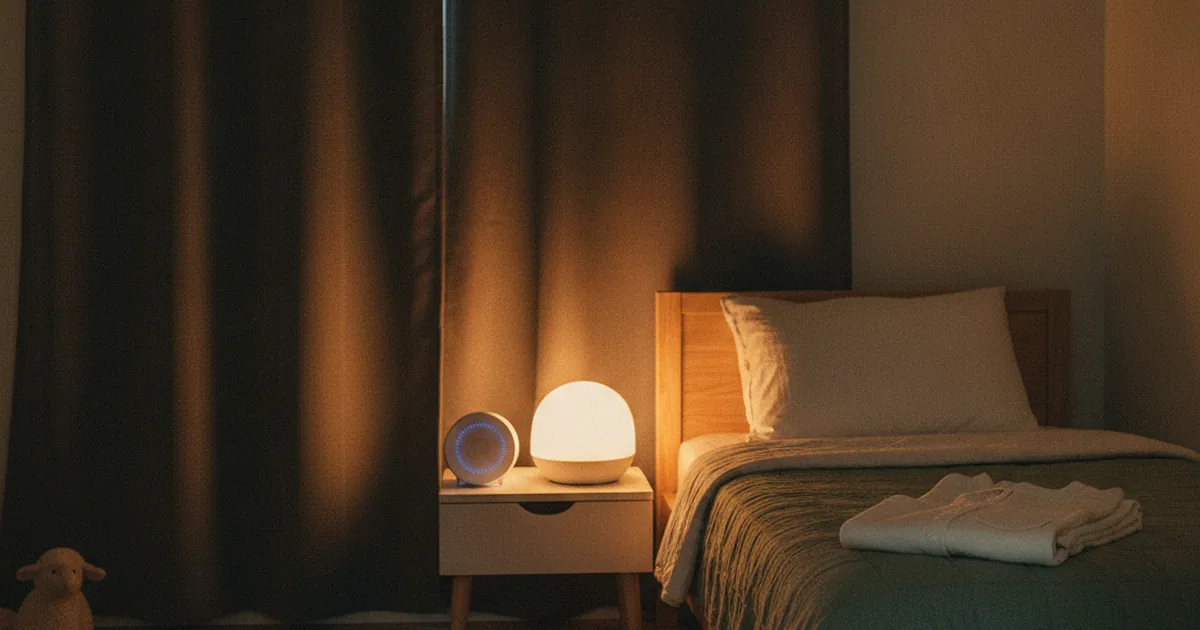
Some kids can fall asleep in a moving car with the radio on. Others fall apart because their pajama seam is in the wrong place. If your child is the second kind — the socks-must-come-off, the-light-is-too-loud, I-can-still-feel-the-tag kind — bedtime can feel like defusing a bomb every single night. It isn't defiance, and it isn't you doing something wrong. It's a nervous system that registers ordinary sensory input as too much, right at the moment it's supposed to be winding down.
What does "sensory-sensitive" actually mean at bedtime?
Sensory sensitivity (sometimes discussed under the umbrella of sensory processing differences) means a child's brain registers sensory input — light, sound, touch, smell, even the feeling of gravity through a mattress — more intensely than most people's. A hallway light that's barely noticeable to you can feel glaring. A humidifier hum that's soothing to one sibling can be unbearable to another. A soft cotton pajama can feel, to a sensitive child, like sandpaper. This isn't picky behavior; it's how their sensory system is genuinely wired, and bedtime is where it shows up most because bedtime asks a child to lie still, in the dark, with nothing to distract from whatever their body is registering.
Sensory sensitivity exists on a wide spectrum. Plenty of kids without any diagnosis have a few sensory quirks that flare up at bedtime — a hatred of seams, a need for total silence, a meltdown over a slightly damp towel. Others have more pervasive sensory processing differences, sometimes alongside autism, ADHD, or a diagnosed sensory processing disorder. The strategies below help across that whole range, because the underlying idea is the same: fewer competing inputs, more predictability.
Why does bedtime hit sensory-sensitive kids so hard?
Daytime is full of natural distraction — movement, activity, other things to focus on — that can drown out low-level sensory noise. Bedtime strips all of that away. The lights go down, the house goes quiet, and suddenly every remaining input — the hum of a vent, the tag in a collar, the exact temperature of the sheets — has nothing to compete with. For a sensory-sensitive child, that quiet doesn't feel calming by default; it feels like the volume just got turned up on everything left. This is closely related to why an overstimulated day can wreck an otherwise good bedtime — a nervous system that's already working hard to process input all day has even less capacity left to filter out the small stuff at night.
How do I actually lower the inputs before bed?
Think of it as a room-by-room, sense-by-sense audit rather than one big fix. Small, boring changes compound.
Light
Dim everything starting 45–60 minutes before bed, not just at lights-out — overhead lights off, lamps only, hallway and bathroom lights on the lowest setting you can manage safely. Block outside light with blackout curtains if streetlights or early summer dusk reach the room. If your child needs some light to feel safe, a single very dim, warm-toned (not blue-white) night light is usually easier for a sensitive system to tolerate than a brighter one.
Sound
Identify and remove or mask the specific sounds that bother your child — a dripping tap, a creaky pipe, noise from another room. A steady, low-volume white or pink noise machine can help by covering unpredictable sounds with one constant, predictable one, which some sensory-sensitive kids find genuinely soothing rather than one more input to fight. Keep it well below hearing-risk volume and placed away from the crib or bed head — see our deeper look at white noise and baby sleep for safe volume and placement. If your child is bothered by voices or media sound, be mindful that even calm-sounding audio can be too much input for some sensory profiles — test at a much lower volume than you'd use for another child.
Touch and texture
Let go of "matching" pajamas in favor of whatever fabric your child actually tolerates — tagless, seamless, soft, well-worn cotton is a common favorite. Wash new sleepwear a few times before first use to soften it. Some sensory-sensitive kids sleep better with firm, even pressure — a weighted blanket (sized and used per manufacturer safety guidance for your child's age and weight) or a snug sleep sack can feel organizing rather than confining. Others need the opposite: nothing touching their neck, loose bedding, bare feet. There's no universal answer here except to follow what your specific child gravitates toward and stop fighting it.
Smell and temperature
Unscented detergent and unscented lotion remove one more variable that's easy to overlook. Keep the room on the cooler side — most kids, sensory-sensitive or not, sleep better slightly cool than warm, and overheating can amplify irritability at exactly the wrong moment.
What does a sensory-friendly wind-down routine look like?
The routine itself matters as much as the environment. A short, predictable wind-down sequence gives a sensory-sensitive child's nervous system advance warning that input is about to drop, rather than an abrupt switch from "on" to "lights out." A few adjustments that help specifically for sensory sensitivity:
- Same order, every night, with no surprises — predictability itself lowers the sensory load, because a known sequence takes less processing than a novel one.
- Firm, calm pressure before stillness — a firm hug, back rubs with steady pressure, or a few minutes wrapped snugly in a blanket before lying down can help a dysregulated body settle before you ask it to be still.
- One input at a time, not several at once — a bath and a story and music playing simultaneously can be too much layering; space activities out instead of stacking them.
- An audio-only, screen-dark wind-down — a screen adds bright light and fast-changing visual and audio input right when you're trying to reduce input, which is part of why we built Sleepy Spell as a screen-dark, offline audio story app: gentle narration in a dark room, with no scrolling glow, autoplay noise, or ads competing for attention. For a sensory-sensitive child, the calmest choice is often the least stimulating one, not the most entertaining one.
- A predictable end signal — a specific phrase, song, or sound that always means "this is the last thing before sleep" helps a sensory-sensitive child anticipate the transition instead of being surprised by it.
Is this just a phase, or something to have evaluated?
Plenty of kids go through stretches of sensory pickiness at bedtime that ease with age and a calmer environment. It's worth a conversation with your pediatrician, and possibly a referral for an occupational therapy evaluation, if sensory struggles are severe, happen every single night despite a low-input routine, or show up during the day too — meltdowns over clothing tags, food textures, loud rooms, or crowds. An OT who specializes in sensory processing can build a personalized "sensory diet" that goes well beyond what a blog post can offer. This article is educational, not medical advice; use your judgment and loop in your child's doctor for anything that feels bigger than a bedtime tweak.
Frequently asked questions
Is sensory sensitivity at bedtime the same as sensory processing disorder?
Not necessarily. Many kids without any diagnosis have some sensory quirks — a hatred of tags, a need for quiet — that show up most at bedtime because it's the quietest, least distracted part of the day. Sensory processing disorder is a more pervasive pattern that affects daily functioning across settings, not just sleep, and is best assessed by a pediatrician or occupational therapist rather than guessed at from bedtime behavior alone.
What's the single highest-impact change for a sensory-sensitive bedtime?
Dimming the lights earlier — 45 to 60 minutes before bed rather than only at lights-out — tends to have an outsized effect, because it gives a sensitive nervous system time to downshift instead of asking for an abrupt switch. Pair it with removing one known irritant, like a scratchy pajama tag or a dripping tap, and most families see a noticeable difference within a week or two.
Should I use a weighted blanket for my sensory-sensitive child?
Weighted blankets help some sensory-sensitive kids feel calmer through even, firm pressure, but they're not right for every child and carry safety guidance around size and weight for younger or smaller children. Choose one sized correctly per the manufacturer's age and weight guidelines, and check with your pediatrician first if your child is very young, has any respiratory or mobility concerns, or can't easily remove the blanket themselves.
My child needs total silence to sleep, but white noise usually helps kids — which is right?
Both can be true for different sensory profiles. Some sensory-sensitive kids find a steady white or pink noise machine calming because it masks unpredictable sounds with one constant one; others find any added sound to be one more input to fight and do better with true quiet. Follow what your specific child settles into rather than a one-size-fits-all recommendation, and keep any sound machine at a safe, low volume regardless.
Can screens help calm a sensory-sensitive child before bed?
Usually not. Screens add bright, often blue-toned light and fast-changing visual and audio input right when the goal is to lower input, which tends to work against a sensory-sensitive nervous system rather than for it. A screen-dark, audio-only wind-down — a calm story or quiet music in a dim room — is generally a gentler choice.
When should I get a professional evaluation instead of just adjusting the routine at home?
If sensory-related meltdowns are severe, happen nearly every night despite a genuinely low-input environment, or show up during the day too — around food textures, clothing, loud rooms, or crowds — it's worth talking to your pediatrician about a referral to an occupational therapist who specializes in sensory processing. They can build a personalized plan that goes further than general bedtime adjustments.
Sources
American Academy of Pediatrics (HealthyChildren.org) — Sensory Integration Therapy.
Child Mind Institute — Sensory Processing Issues Explained.
STAR Institute for Sensory Processing — About Sensory Processing Disorder (SPD).
Sleep Foundation — Weighted Blanket Benefits.