Night Terrors vs. Nightmares: How to Tell Them Apart and Respond
Part of our Complete Calm Bedtime Guide.
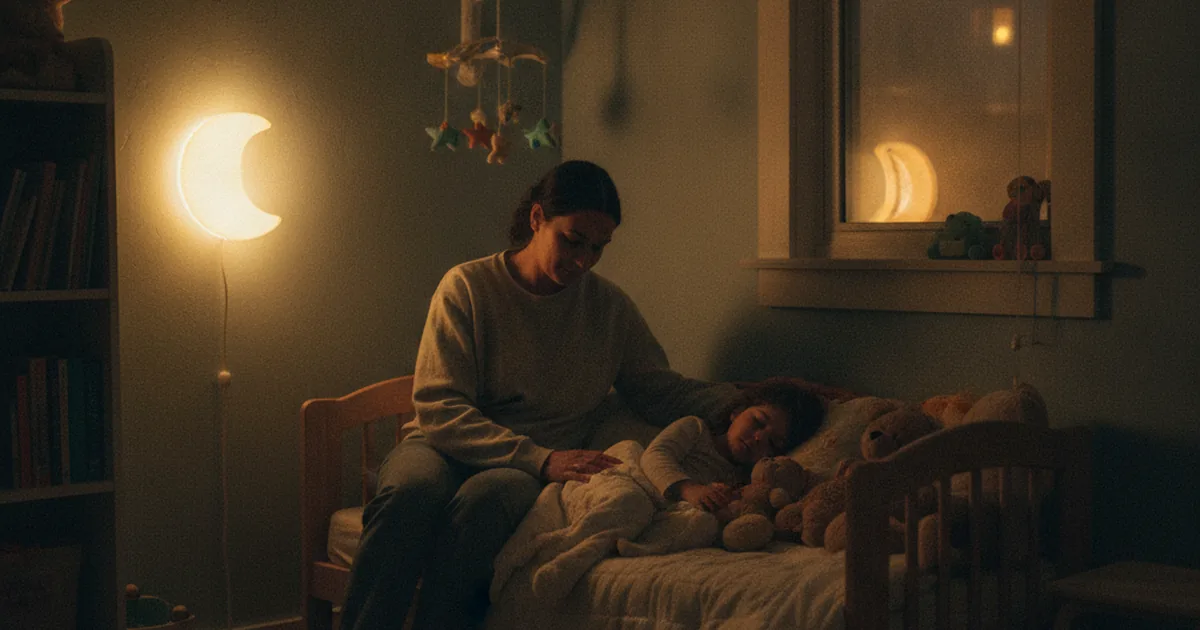
Few things rattle a parent like being woken at 11 pm by screaming from your child’s room, only to find them wide-eyed, thrashing, and completely inconsolable — and then, somehow, no memory of it the next morning. Is that a nightmare? Something worse? The honest answer is that it’s probably a night terror: a different, and in some ways less concerning, event than a bad dream, even though it looks far more alarming in the moment. Telling the two apart matters because the right response is almost opposite — one calls for comfort, the other calls for calm, quiet safety and staying out of the way.
What’s the actual difference between a night terror and a nightmare?
The clearest signal is simple: if your child wakes up and remembers it, it’s a nightmare. If they don’t wake up and won’t remember it, it’s a night terror. Everything else follows from that one distinction, because the two happen during entirely different stages of sleep.
- Timing: Night terrors strike early in the night, usually 90 minutes to 3 hours after falling asleep, during the deepest stage of non-dream sleep. Nightmares tend to happen in the second half of the night, when dreaming (REM sleep) is heaviest.
- Awareness: During a night terror, a child’s eyes may be open, but they’re not really awake and won’t recognize you. During a nightmare, they wake up fully and know exactly who you are and that they need you.
- Memory: Night terrors leave no memory at all, even minutes later. Nightmares are usually remembered vividly, sometimes for days.
- What it looks like: Night terrors involve screaming, sitting up, a racing heart, and sometimes thrashing or trying to get out of bed — while nightmares involve a child waking up frightened, often crying and reaching for you.
- What helps: Night terrors need safety and patience, not waking. Nightmares need comfort, reassurance, and being fully woken up and soothed.
What does a night terror actually look like?
A night terror can look frightening: your child may sit bolt upright, scream, cry, kick, or even try to climb out of bed, with a racing pulse and sweat on their skin. Their eyes might be open and staring, but they’re not seeing you — they’re still asleep. Trying to talk them down or wake them up usually doesn’t work and can make the episode last longer. Most run their course in a few minutes, though some stretch to 30-45 minutes, and then the child simply lies back down and keeps sleeping as if nothing happened — with zero memory of it in the morning, even though you might still be shaken from watching it.
What does a nightmare actually look like?
A nightmare is far more familiar: your child wakes up scared, often crying, and comes looking for you or calls out. They can describe what frightened them — monsters, being chased, losing you — and they want, and benefit from, comfort. Unlike a night terror, a nightmare is a genuine waking event, so reassurance actually reaches them in the moment. Occasional nightmares are a normal part of a developing imagination, particularly once a child starts distinguishing pretend from real around age 3.
Why do night terrors and nightmares happen?
Both are far more common than most parents expect, and neither means something is wrong with your child. The most consistent triggers for night terrors are overtiredness, an irregular sleep schedule, fever or illness, and sleeping somewhere unfamiliar — on top of a genetic tendency, since night terrors and sleepwalking often run in families. Nightmares are more tied to daytime stress, an overstimulating evening, or an active imagination processing the day’s events. An overtired child is more prone to both, one more reason a consistent, well-timed bedtime pays off far beyond just an easier bedtime fight.
How should I respond during a night terror?
The instinct to scoop your child up and wake them is strong, but resist it. Waking a child mid-terror tends to prolong the episode and can leave them disoriented and even more distressed, because you’re interrupting deep sleep rather than a dream. Instead:
- Stay close, but don’t try to restrain, wake, or reason with them
- Keep your voice low and your presence calm — your child can’t process comfort right now, but a calm room helps the episode pass sooner
- Focus on physical safety: clear anything they could trip on, block stairs if needed, and gently guide them away from danger without fully waking them
- Wait it out. Most episodes end within a few minutes, and your child drifts back into ordinary sleep without ever truly waking
How should I respond after a nightmare?
Here, the instinct to comfort is exactly right. Go to your child quickly, hold them, and reassure them in a calm, steady voice that they’re safe and you’re there. Let them describe the dream if they want to, without dismissing it (“that’s silly”) or dwelling on it too long. A brief, calm re-settling — a few minutes of quiet reassurance, maybe a soft audio story playing low in the background — usually gets them back to sleep faster than an extended conversation about what scared them.
How can I reduce night terrors and nightmares?
Neither can be eliminated entirely, since both are a normal part of childhood sleep development, but a few habits meaningfully reduce how often they show up. Overtiredness is the single biggest lever: a consistent, age-appropriate bedtime that avoids chronic sleep debt lowers the odds of both. A steady, screen-free wind-down helps regulate the nervous system before sleep too — an overstimulated evening feeds nightmare content, and a dysregulated bedtime feeds the overtiredness that fuels night terrors.
If your child is working through a worry, a change, or something scary they saw or heard, give it space earlier in the evening rather than right at bedtime; helping their nervous system settle before the lights go off reduces the raw material nightmares are made of. And a calm, screen-free story is a gentler note to end the day on than a bright screen — exactly what Sleepy Spell is built for: private, screen-dark audio stories that help settle a child’s mind before sleep without introducing new stimulation right before bed.
When should I call the doctor?
Most night terrors and nightmares are developmentally normal and resolve on their own as children get older. Reach out to your pediatrician if episodes happen most nights, last longer than 30-45 minutes, involve your child wandering through the house, include loud snoring or pauses in breathing, or if daytime mood and behavior are noticeably affected by fear of sleep. This is general parenting guidance, not medical advice — your pediatrician is the right person to rule out other causes and advise on your specific child.
Frequently asked questions
What’s the main difference between a night terror and a nightmare?
A nightmare is a scary dream that wakes a child up, usually in the second half of the night, and they’ll remember it and want comfort. A night terror happens earlier in the night, during deep non-dream sleep, and the child screams or thrashes while still essentially asleep — they won’t remember it, and won’t recognize you if you try to wake them. The rule of thumb: if your child wakes up and remembers, it’s a nightmare; if they don’t wake up and won’t remember, it’s a night terror.
Will my child remember a night terror?
No. This is the clearest way to tell a night terror from a nightmare after the fact. Because a night terror happens during deep, non-REM sleep rather than during a dream, your child has no memory of it the next morning, even though it may have looked frightening to you in the moment. Nightmares, by contrast, are usually remembered clearly and often need to be talked through.
Should I wake my child during a night terror?
No — don’t try to wake them. Waking a child mid-terror tends to prolong it and can leave them confused and more upset, since you’re pulling them out of deep sleep rather than out of a dream. Instead, stay nearby, keep your voice low and calm, and focus on safety: make sure they can’t fall, hit furniture, or wander somewhere unsafe. Most episodes pass on their own within a few minutes to 45 minutes, and your child settles back into normal sleep without ever waking up.
What causes night terrors in toddlers and young kids?
The biggest triggers are overtiredness, an inconsistent sleep schedule, fever or illness, and sleeping somewhere unfamiliar. Family history also plays a role — night terrors and sleepwalking tend to run in families. None of these mean anything is wrong with your child; night terrors are a common, usually harmless quirk of an immature sleep system transitioning between sleep stages.
At what age do night terrors and nightmares peak?
Night terrors are most common between ages 3 and 7 and typically fade by age 10 to 12, affecting roughly 1 in 3 children at some point. Nightmares can start as early as 6 months but tend to peak between ages 3 and 6, when imagination outpaces a child’s ability to distinguish dreams from reality, and they can continue on and off well into the school years.
When should I talk to a pediatrician about night terrors or nightmares?
Most night terrors and nightmares are developmentally normal and need no treatment. Check in with your pediatrician if episodes happen most nights, last longer than 30-45 minutes, involve your child leaving the bed and moving through the house, include breathing pauses or loud snoring, or if daytime mood, behavior, or fear of sleep is being significantly affected. This is general guidance, not medical advice — your pediatrician can rule out other causes and advise on next steps for your child specifically.
Sources
Sleep Foundation — Night Terrors: Causes, Treatment, and Prevention.
American Academy of Pediatrics (HealthyChildren.org) — Nightmares, Night Terrors & Sleepwalking in Children: How Parents Can Help.
ZERO TO THREE — Sleep: What Every Parent Needs to Know.
Provini F, et al. — An Evolutionary Perspective on Night Terrors. PubMed, 2018.