Why Your Toddler Fights Sleep Even When Exhausted (And What to Do)
Part of our Complete Calm Bedtime Guide.
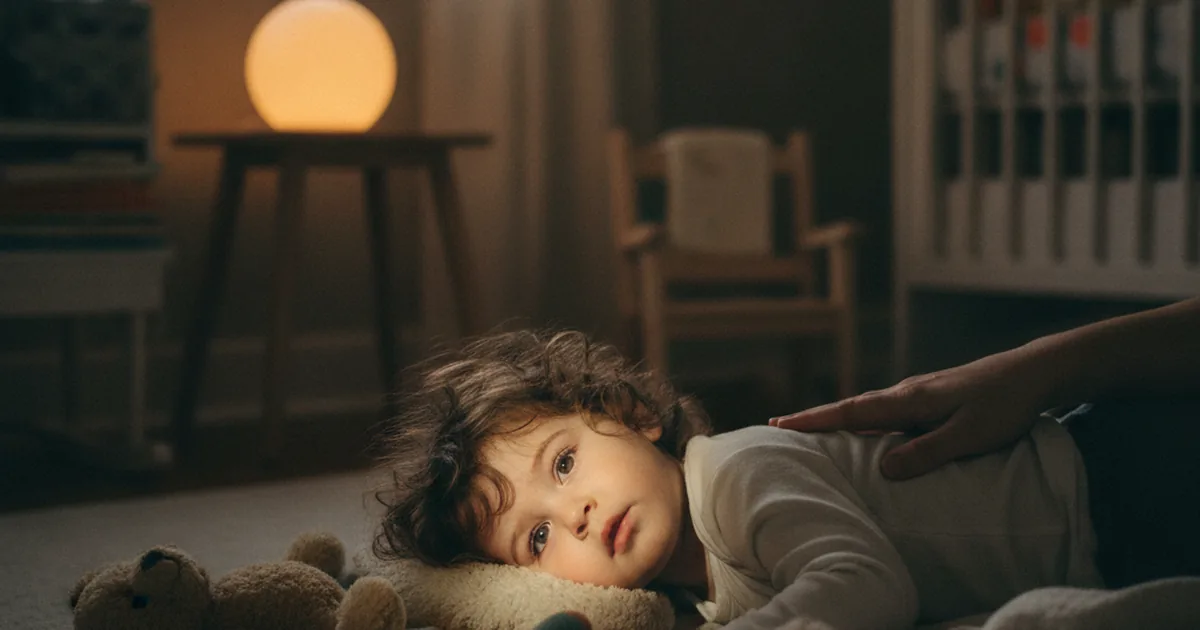
It’s one of parenting’s great paradoxes. Your toddler has been rubbing their eyes since 6 pm. They’re grumpy, they tripped over nothing twice, they cried because the wrong parent handed them a cup. Every signal is screaming tired. And then you try to put them to bed — and suddenly they’re bouncing off the walls, demanding another story, another sip of water, another hug, anything except sleep.
You are not doing anything wrong. This is a genuinely physiological phenomenon, and understanding what’s happening in your child’s body makes it much easier to handle — and to prevent next time.
The real reason overtired toddlers won’t sleep
Sleep pressure — the biological drive to sleep — builds throughout the day through the accumulation of a molecule called adenosine. When a child reaches their natural sleep window, adenosine levels are high enough that the brain is ready to wind down. This is the moment you want to catch.
Miss that window by even 20 to 30 minutes, and something counterproductive happens. The brain interprets the continued wakefulness as a problem requiring a solution. It triggers the release of cortisol — the same stress hormone that helps adults power through a difficult meeting — and adrenaline, which are both stimulating chemicals. The body is essentially trying to keep itself functional in an emergency.
The result is what many parents call the “second wind”: a child who looks inexplicably energised despite being desperately tired. They may become hyperactive, giddy, emotional, or all three at once. Sleep is now fighting an uphill battle against a hormonal surge designed to keep them awake.
This is not a behavioural problem. It’s not defiance. It’s biology.
Why does my toddler seem wired right at bedtime?
Several things can push a toddler into this overtired state on any given evening:
- A skipped or shortened nap. Toddlers between 1 and 3 still need that midday sleep, and even a 20-minute nap deficit can compress the evening sleep window significantly.
- An unusually stimulating afternoon. Birthday parties, outdoor play, a trip to a busy place — high-sensory experiences are wonderful, but they deposit extra cortisol that takes time to clear.
- Screens too close to bedtime. Blue-light-emitting screens suppress melatonin production and are inherently stimulating. Even a “calm” show raises arousal levels.
- Bedtime drifting too late. A child who was going to bed at 7 pm but has gradually crept toward 8:30 pm over several weeks is almost certainly going down overtired every night.
- A developmental leap. New motor skills, language bursts, or cognitive milestones activate the brain in ways that can temporarily disrupt sleep patterns — even in children who were sleeping well before.
Is my toddler overtired or just not ready for sleep?
This is worth distinguishing, because the approach is different. A toddler who genuinely isn’t tired yet will play contentedly without distress. An overtired toddler is usually emotional — crying easily, frustration tolerance is low, they may have a glazed or slightly manic quality to their energy.
Watch for these early sleepy cues — they appear 15–20 minutes before overtiredness typically sets in:
- A glassy or unfocused look in the eyes
- Rubbing eyes or pulling at ears
- Slowing down in play, losing interest in toys
- One or two yawns
- Mild clinginess or wanting to be held
- Moving more slowly or becoming slightly uncoordinated
This is your window. Starting the bedtime routine the moment you spot these cues — rather than finishing the episode, or waiting until it’s “proper bedtime” — can make an enormous difference to how quickly your child settles.
How to break the overtired cycle: 6 practical steps
1. Move bedtime earlier (yes, really)
This is the most counterintuitive piece of advice in toddler sleep, and also one of the most effective. When your child has been overtired for several nights in a row, shifting bedtime 20–30 minutes earlier — even if they seem energetic — helps you get ahead of the cortisol surge. Most toddlers aged 1–3 do best with a bedtime between 6:30 and 7:30 pm, with the exact timing depending on their nap schedule and wake time.
2. Start the wind-down 30 minutes before lights out
The bedtime routine should be a transition, not an abrupt stop. Thirty minutes before the target sleep time, begin lowering stimulation: dim the lights, reduce noise, shift to quieter activities. Big feelings and rough-and-tumble play belong to the first half of the evening, not the last.
3. Remove screens at least an hour before bed
Research is consistent on this point: screens before bed delay sleep onset in children. The American Academy of Pediatrics recommends avoiding screens in the hour before bed for all children, and this applies whether the content is fast-paced or slow. A calm, predictable replacement — colouring, a puzzle, gentle play — is far more effective than any amount of willpower applied later in the evening.
4. Keep the routine the same every night
Predictability is deeply calming to a toddler brain. A sequence of events they’ve done hundreds of times — bath, pyjamas, teeth, story, lights out — works like a Pavlovian cue for sleep. The body starts preparing for sleep before your child has even finished their bath, because the routine has trained it to. Consistency on weekends matters just as much as weekday consistency. A late Saturday night tends to unravel Monday bedtime.
5. Lower sensory input at bedtime
Some children — especially those who are sensory-sensitive — need more decompression time than others. A warm bath, soft clothing with no scratchy seams, dim amber lighting (rather than white overhead lights), and a quiet environment all help the nervous system downshift. If you want to understand more, we’ve written specifically about calming a child’s nervous system before sleep.
6. Use audio instead of screens for the final story
If your toddler loves a bedtime story — and most do — an audio story is a genuinely better option at night than a picture book read from a bright device or a screen-based story app. It engages imagination without visual stimulation, keeps the room dark, and lets little eyes close naturally. This is exactly what Sleepy Spell was built for: private, screen-dark audio bedtime stories that work with the lights off, with no screen glow to push melatonin back.
Note: The suggestions in this post are general parenting strategies, not medical advice. If your child’s sleep difficulties are severe, persistent, or accompanied by snoring, prolonged breath-holding, or significant daytime behaviour challenges, speak with your paediatrician.
What about the nights it still goes wrong?
Even with the best routine in the world, some nights are harder than others. A child fighting a cold, cutting a molar, or processing a big day emotionally will sometimes take longer to settle regardless of what you do. On those nights, the kindest thing is often to stay calm, keep the environment dark and quiet, and trust that the routine will eventually do its job.
Avoid the temptation to add more stimulation — an extra story on a tablet, turning the lights back on, coming back for “one more” chat — because each intervention resets the clock. A quiet presence, a short reassurance, and a consistent exit tend to be more effective than anything elaborate.
Over time — usually within 2–3 weeks of consistent earlier bedtimes and a locked-in routine — most toddlers shift out of the overtired pattern. You’ll start catching that early sleepy window reliably, the cortisol surge stops being a nightly visitor, and bedtime genuinely becomes the calm, connected moment you were hoping for.
Frequently asked questions
Why does my toddler fight sleep even when they’re clearly tired?
When toddlers miss their ideal sleep window, the body releases cortisol and adrenaline as a coping mechanism. These stress hormones create a stimulating “second wind” that makes falling asleep much harder — even though the child is genuinely exhausted. Catching the first signs of sleepiness, before overtiredness sets in, is the key to easier bedtimes.
What is overtired toddler syndrome?
“Overtired toddler syndrome” is a colloquial term for the pattern where a toddler who has been awake too long becomes wired, hyper, or emotionally dysregulated rather than sleepy. It happens because sleep pressure that goes unrelieved triggers a cortisol response — the same hormone released under stress — which is stimulating rather than sedating.
What are the early signs my toddler is ready for sleep (before they get overtired)?
Early sleepy cues in toddlers include: rubbing eyes or pulling at ears, a brief pause or glassy look in their gaze, slowing down movement or play, mild clinginess, yawning once or twice, and losing interest in toys. These signs appear in a narrow window — often just 15–20 minutes — before overtiredness and a second wind kick in.
Does an earlier bedtime really help an overtired toddler?
Yes — this is one of the most counterintuitive but well-supported strategies in pediatric sleep. Moving bedtime 20–30 minutes earlier on days when a toddler skipped a nap or had an active afternoon helps you catch the sleep window before cortisol rises. An earlier start often means the child falls asleep faster and sleeps longer.
How long should a toddler’s bedtime routine be?
Most sleep specialists recommend a toddler bedtime routine of 20–30 minutes. It should be calm, predictable, and screen-free. A typical sequence might be: bath or wash-up, pyjamas, a small snack if needed, teeth brushing, then 1–2 stories or an audio story, followed by lights out. Consistency matters more than length — doing the same sequence every night is what signals the brain that sleep is coming.
Why does my toddler suddenly start fighting sleep after months of easy bedtimes?
Regressions in toddler sleep are common and usually tied to developmental leaps: new language, motor skills (like climbing), or cognitive milestones can temporarily disrupt sleep patterns. Separation anxiety peaks around 18 months and again around age 2–3. Travel, illness, a new sibling, or a change in routine can also trigger a regression. Most regressions resolve within 2–6 weeks if the core routine stays consistent.
Sources
American Academy of Pediatrics — Healthy Sleep Habits: How Many Hours Does Your Child Need?.
Sleep Foundation — Toddler Sleep: What to Expect.
ZERO TO THREE — Sleep: What Every Parent Needs to Know.
Jenni OG, Dahl RE — Sleep, Cognition, and Emotion: A Developmental View. Progress in Brain Research, 2008.