How to Drop the Nap Without Wrecking Bedtime
Part of our Complete Calm Bedtime Guide.
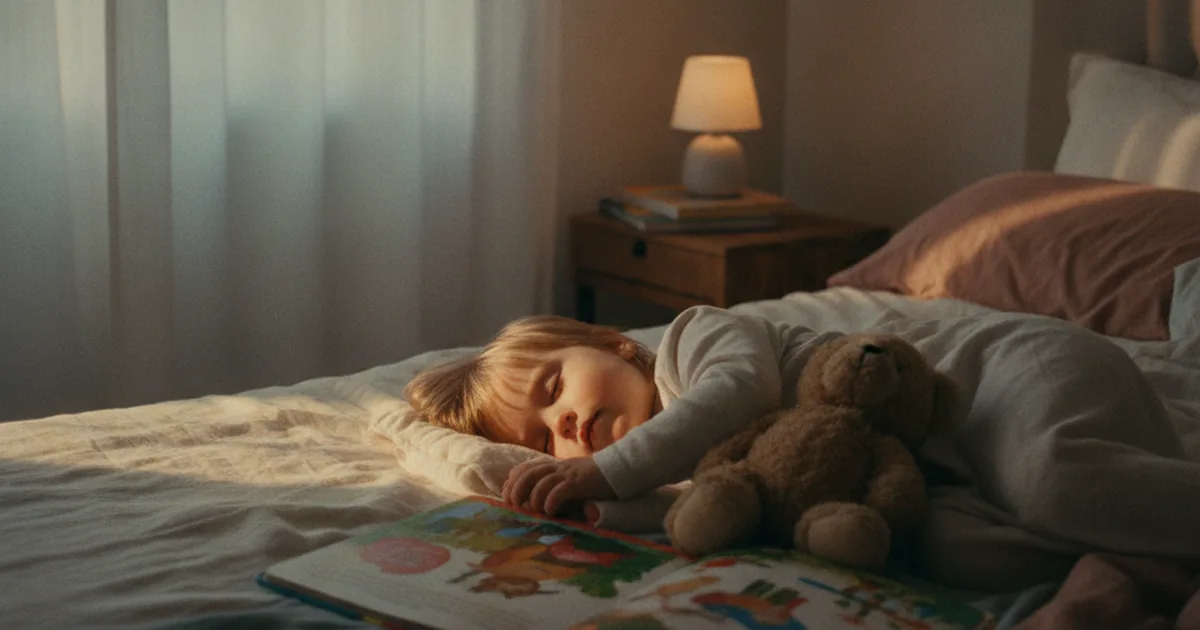
There’s a particular kind of dread that sets in the first time your toddler stands up in the crib, chats to themselves for forty-five minutes, and never actually sleeps. Is this it? Are we done with naps? And if we are — why does bedtime suddenly feel like a nightly negotiation with a tiny, overtired lawyer?
Dropping the nap is one of the biggest sleep-schedule shifts of early childhood, and it’s also one of the most mishandled. Drop it too early or too abruptly, and you trade a nap problem for a much bigger bedtime and overtiredness problem. Done gradually and with the right buffer, the transition can be almost boring — which is exactly what you want.
How do I know my toddler is actually ready to drop the nap?
The single biggest mistake parents make here is reacting to one bad nap. A single day of nap refusal is usually a blip — a disrupted morning, a growth spurt, an exciting event coming up. Real readiness looks like a pattern that holds for two weeks or more:
- Consistently taking 30-45+ minutes to fall asleep at naptime, or not falling asleep at all
- The nap increasingly pushing bedtime later, night after night
- Early morning waking (5:30 am or earlier) that wasn’t a pattern before
- Playing contentedly and calmly during nap time rather than showing sleepy cues like eye-rubbing or fussiness
- Bedtime becoming a fight most nights, even with a full nap that day
Most toddlers drop the nap somewhere between ages 3 and 5, but the range is wide — some children give it up at 2, plenty still nap in kindergarten. Age is a background fact, not a deadline. Let the pattern, not the calendar, make the call.
Why dropping the nap can wreck bedtime (the seesaw effect)
Think of your child’s sleep drive as a seesaw between two daily rest periods. Remove one side abruptly, and the other side takes the full weight of a much longer stretch of wakefulness — often 7 to 8 hours longer than they’re used to managing in one go.
That extra sleep pressure can go one of two ways. Some toddlers crash hard well before dinner, melting down over something trivial because their tank is simply empty. Others miss their ideal sleep window and get a stress-hormone “second wind” instead — wired, giddy, and resistant right at the moment you need them to wind down. Either way, the nap and bedtime are directly connected, and pulling one lever without adjusting the other is what causes the wreckage.
The gradual approach: replace, don’t just remove
1. Start with quiet time, not nothing
Rather than cutting the rest period entirely, replace it with 45-60 minutes of quiet time at the same time, in the same room, as the old nap. No pressure to sleep — just picture books, soft toys, or a calm audio story with the lights low and no screen. Many toddlers still drift off some days during quiet time, which is fine; the structure does the work either way, giving the nervous system a scheduled reset even when actual sleep doesn’t happen.
2. Move bedtime 30-45 minutes earlier
This is the step families skip, and it’s the one that matters most. On any day without a real nap, shift bedtime earlier by 30-45 minutes to catch the sleep window before overtiredness sets in. Yes, even if they don’t seem tired at 6:30 pm — especially then. Waiting for obvious tiredness often means you’ve already missed it.
3. Keep the wind-down calm and consistent
A predictable, screen-free wind-down matters more during this transition than at any other time, because your child’s system has less buffer to absorb a chaotic evening. Dim the lights, lower the noise, and keep the last 30 minutes before lights-out boring on purpose.
4. Expect an in-between phase, not a clean switch
Give the transition two to six weeks. Most toddlers don’t go from “naps every day” to “never naps” overnight — they bounce between the two for a while, napping on active days and skipping it on quiet ones. Follow their lead day by day rather than committing to a fixed schedule too soon.
Signs the transition is going badly
A few rough evenings are normal. A pattern isn’t. Watch for:
- Daily meltdowns in the late afternoon or early evening
- Falling asleep in the car or at the dinner table
- Bedtime resistance and tears most nights, even with an earlier start time
- A noticeable dip in mood, patience, or behaviour that lasts more than a week
If you’re seeing two or more of these consistently, it’s a sign the transition moved faster than your child’s body can handle — not that something is wrong with your child.
It’s okay to bring the nap back
Nap needs aren’t linear, and reinstating a short nap or extending quiet time isn’t a failure — it’s responsive parenting. Many toddlers need an occasional nap for months after “mostly” dropping it, especially around illness, growth spurts, travel, or a big developmental leap. Offer a nap on the roughest days, keep bedtime early, and let the need for daytime sleep taper off in its own time rather than forcing a hard stop.
Note: This is general parenting guidance, not medical advice. If sleep changes come with snoring, gasping, prolonged breath-holding, or significant developmental or behavioural concerns, talk to your pediatrician.
Frequently asked questions
When should I drop my toddler’s nap?
Most toddlers drop their nap somewhere between ages 3 and 5, though a few give it up as early as 2 and others still nap into kindergarten. Age is a poor predictor on its own — the better signal is a consistent pattern of bedtime resistance and early nap struggles lasting two or more weeks, not just one or two off days.
How do I know my toddler is ready to drop the nap?
Look for a cluster of signs over at least two weeks: consistently taking 30-45 minutes or more to fall asleep at naptime, the nap pushing bedtime later and later, early morning waking that wasn’t there before, and a child who plays contentedly during nap time instead of showing sleepy cues. One rough nap doesn’t mean readiness — a two-week pattern does.
What is quiet time and how do I start it?
Quiet time is a structured rest period, at the same time and place as the old nap, where your child doesn’t have to sleep but does have to stay calm and low-stimulation: picture books, quiet toys, or a soft audio story on a dim, screen-free device. Keep it to 45-60 minutes in the same room as the old nap. It gives their nervous system a reset without the pressure of forcing sleep, and it’s the single most effective bridge between full napping and no napping.
Why does bedtime get harder right after we drop the nap?
Dropping the nap removes a scheduled release valve for the sleep pressure that builds through the day. Without it, many toddlers swing between two extremes: melting down from exhaustion well before dinner, or picking up a cortisol-driven “second wind” that makes bedtime itself harder despite being more tired overall. Both are temporary and respond to an earlier bedtime while the body recalibrates.
How long does the nap transition take?
Plan for two to six weeks of an unsettled schedule. Many families go through an in-between phase where naps happen some days and not others, which is normal and not a sign you’re doing it wrong. Keeping bedtime consistently earlier during this stretch — often by 30-45 minutes — is what keeps the transition from spiraling into chronic overtiredness.
Should I bring the nap back if bedtime gets worse?
Yes, and it’s not a step backward. If your child is having daily meltdowns, falling asleep in the car, or bedtime becomes chaotic for more than a week straight, reinstating a short nap or quiet time with an earlier bedtime is the right call. Nap needs aren’t linear — many toddlers need an occasional nap for months after mostly dropping it, especially around growth spurts, illness, or big transitions.
Sources
Sleep Foundation — When Should Kids Stop Taking Regular Naps?.
American Academy of Pediatrics — Healthy Sleep Habits: How Many Hours Does Your Child Need?.
ZERO TO THREE — Sleep: What Every Parent Needs to Know.
Spencer RMC, et al. — Contributions of Memory and Brain Development to the Bioregulation of Naps and Nap Transitions in Early Childhood. PNAS, 2022.