Helping an Anxious Child Fall Asleep: A Calm Bedtime Plan for Worry
Part of our Complete Calm Bedtime Guide.
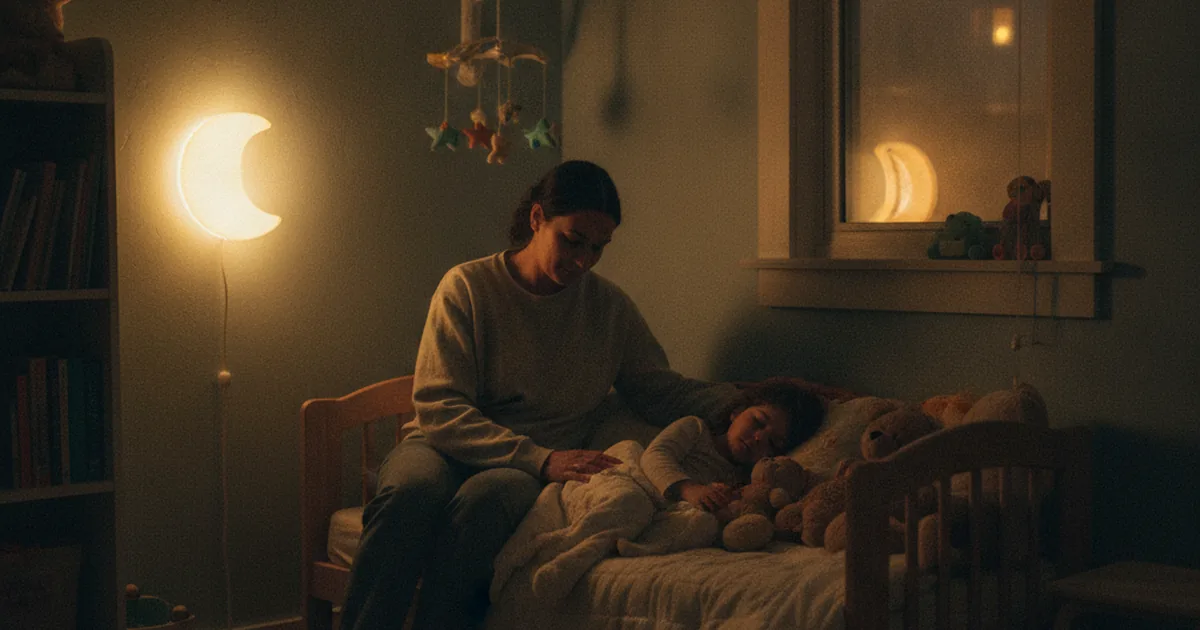
Your child was fine at dinner. Fine in the bath. Fine right up until the lights went down — and then, suddenly, there's a monster in the closet, a noise outside, a fear of being alone, or just tears with no clear reason at all. If bedtime has quietly turned into the moment your otherwise easygoing kid falls apart, you're not imagining it, and you haven't done anything wrong. Worry has a habit of showing up exactly when the day's distractions run out.
Why does worry show up specifically at bedtime?
Bedtime is the first genuinely quiet, unstimulated stretch of your child's whole day. All day there's been noise, movement, and things to look at — and the moment all of that stops, whatever worry was sitting quietly underneath finally has room to surface. Add to that a dark room, which removes the visual reassurance that everything is fine, and the fact that sleep itself means separating from you for hours, and bedtime becomes the single hardest transition for an anxious nervous system to make. This is also why an overstimulated evening can make bedtime worse even when the worry itself has nothing to do with the day's activities — a wound-up body has less capacity to talk itself down.
What does bedtime anxiety actually look like?
It rarely announces itself as "I'm anxious." More often it shows up as behavior:
- Repeated calling out or coming out of the room after lights-out, with an ever-growing list of things they suddenly need
- Specific fears: monsters, the dark, burglars, a noise, something under the bed
- Wanting a parent to stay in the room, or refusing to be anywhere but your bed
- Stalling tactics — one more drink, one more question, one more hug — that go on far longer than the routine calls for
- Physical complaints at bedtime specifically (a sudden stomachache or feeling unwell that wasn't there an hour earlier)
- Genuine tears or panic that feel out of proportion to whatever they say is wrong
It's easy to read all of this as manipulation or a boundary-testing phase, and sometimes a little of both is happening. But underneath a lot of bedtime resistance is a child who genuinely doesn't feel safe enough yet to be alone with their thoughts in the dark.
How can I help in the moment, when my child says "I'm scared"?
Start by naming the feeling rather than arguing with it: "You're feeling scared right now, and I'm right here with you." Two common instincts tend to backfire:
- Dismissing it ("there's nothing to be scared of, go to sleep") can leave a child feeling unheard, which often makes them push harder to be taken seriously.
- Over-confirming it (dramatically checking under the bed, spraying "monster spray," searching the closet with a flashlight) can accidentally signal to your child that the threat might be real after all, even though the gesture is meant to reassure.
A steadier middle path: acknowledge the feeling, stay calm and matter-of-fact, and offer your presence without theatrics. "I hear you, that sounds scary. I'm going to sit right here for a few minutes while your body settles." Calm is contagious — a child borrows your nervous system's steadiness before they can generate their own.
What actually helps reduce bedtime worry, night after night?
Give worry an earlier appointment
A short "worry time" earlier in the evening — a few minutes where your child says or draws whatever is on their mind, well before the bedtime routine starts — gives anxious thoughts somewhere to go besides the pillow. Some families use a simple "worry jar" where a child writes or draws their worry on a scrap of paper, then puts it away for the night.
Keep the routine short, predictable, and the same every night
Predictability is calming to an anxious nervous system because it removes uncertainty about what happens next. A short, consistent wind-down routine — same steps, same order, same rough time — does a lot of the anxiety-reducing work on its own, simply because there's nothing left to guess at.
Use light and sound as tools, not crutches
A dim, warm nightlight is a reasonable accommodation, not a habit to fear, since it removes the specific trigger of total darkness without disrupting sleep. Steady background sound can also mask the creaks and distant noises that fuel a worried imagination. Screens right before bed tend to work against this, since bright light and stimulating content leave a mind more activated, not less.
Give their mind one calm thing to hold onto
An anxious mind rarely settles by being told to "stop thinking about it" — it settles when it's given something else to focus on instead. A slow, gentle story read in a soft voice does exactly that: it occupies the part of the brain that would otherwise be scanning for danger. This is the whole idea behind Sleepy Spell — a calm, screen-dark audio story a child can listen to right in the dark, so there's something soothing to follow instead of the silence where worry likes to grow, and the narration happens privately on the device, with no child data sent - just the story request.
Support the exit, don't remove it
If your child needs you to stay, stay — but aim to gradually do less each night rather than the same amount indefinitely. Sit on the bed for a few nights, then in a chair beside it, then near the door, moving a little further away every few nights. This "camping out" approach, recommended by child psychologists, lets a child build the actual skill of falling asleep independently while still feeling supported the whole way through, rather than being asked to do it cold.
Should I let my child sleep in my bed when they're anxious?
An occasional exception on a genuinely hard night won't undo anything. The concern is when it becomes the nightly default, since that can quietly reinforce the belief that your child isn't capable of sleeping on their own, which tends to keep the underlying anxiety going rather than resolve it. The gradual-support approach above gives you a middle ground: real comfort, without your child concluding that their own bed isn't safe.
When is it more than typical bedtime worry?
Most bedtime fears are a normal, time-limited part of development — often tied to an imagination boom around ages 3 to 6, a specific stressor like a house move or a new sibling, or a stretch of separation anxiety. These usually ease within a few weeks to a couple of months as the routine settles and the stressor fades. This is different from a night terror or nightmare, which is a sleep event rather than waking worry, though an anxious, keyed-up bedtime can make both more likely.
It's worth talking to your pediatrician or a child therapist if the worry is severe, happens most nights for several months without easing, comes with physical symptoms like stomachaches, or is also showing up during the school day. This is general guidance and not medical advice; a professional can properly assess your child, and for many kids the most effective, evidence-based path forward is a short course of cognitive behavioral therapy aimed specifically at childhood anxiety.
Frequently asked questions
Why does my child suddenly get anxious right at bedtime?
Bedtime is often the first quiet, unstimulated moment of the day, and worry that got pushed aside during a busy afternoon tends to surface the second the distractions stop. Darkness also removes visual reassurance, and being separated from you for the night can itself be the trigger, especially for younger children still working through separation anxiety. None of this means something is wrong — it's simply the one moment in the day with nothing left to compete with a worried mind.
Is it normal for kids to be scared of the dark or monsters at night?
Yes, very. Fear of the dark, monsters, or being alone is one of the most common childhood fears, peaking roughly between ages 4 and 8 as imagination outpaces a child's ability to fully separate pretend from real. Most children move through it on their own with steady reassurance and a predictable routine, without it becoming a lasting issue.
What should I say when my child says "I'm scared" at night?
Name the feeling before you try to fix it: "You're feeling scared right now, and I'm right here." Avoid dismissing it ("there's nothing to be scared of") since that can make a child feel unheard, but also avoid theatrically confirming the fear (spraying "monster spray" or checking under the bed with a flashlight), which can accidentally signal that the threat is real. A calm, matter-of-fact tone that acknowledges the feeling and offers steady presence works better than either extreme.
Should I let my anxious child sleep in my bed?
Occasional comfort during a hard night is fine and won't create a lasting habit, but making it the nightly solution tends to reinforce the belief that your child can't manage sleep on their own, which can keep the anxiety going. A better middle ground is staying nearby without taking over — sitting by the bed for a few minutes and gradually moving your chair toward the door over successive nights — so your child still falls asleep in their own bed, just with steady support while they build the skill.
How long does bedtime anxiety usually last?
For most children, bedtime worry is a phase tied to a developmental stage (like the imagination boom around ages 3-6) or a specific stressor (a house move, a new sibling, starting school), and it eases within a few weeks to a couple of months once the routine settles and the stressor passes. If it has lasted for several months, is getting worse rather than better, or shows up as anxiety during the day too, it's worth a closer look rather than waiting it out.
When should I get professional help for a child's bedtime anxiety?
Check in with your pediatrician or a child therapist if the worry is severe, lasts most nights for more than a few months, is also showing up during the school day, is accompanied by physical symptoms like stomachaches or panic, or is significantly disrupting sleep for your child or your household. This is general guidance, not medical advice; a pediatrician or child psychologist can properly assess your child and recommend next steps, which for many kids includes cognitive behavioral therapy, a highly effective, evidence-based approach for childhood anxiety.
Sources
American Academy of Pediatrics (HealthyChildren.org) — Help Your Child Manage Anxiety: Tips for Home & School.
Sleep Foundation — Anxiety and Sleep: Understanding the Connection for Better Rest.
Child Mind Institute — How to Help Children Manage Fears.
ZERO TO THREE — Nothing to Fear But Fear Itself: Responding to Toddlers' Fears.