Why Bedtime Stories Beat Bedtime TV for Winding Down
Part of our Complete Calm Bedtime Guide.
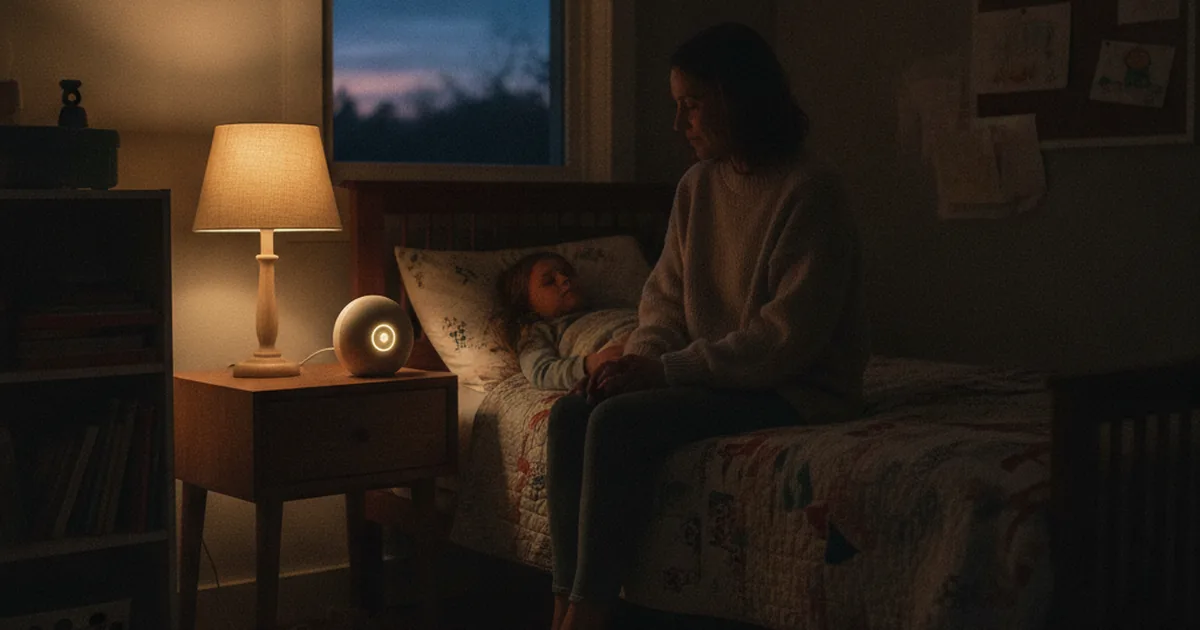
Nearly every parent has been here: the day's screen time is supposedly done, but "just one more show" creeps in as the wind-down story, because it's easy and the kids love it. It doesn't look like a big deal — it's calm, it's a kids' show, surely that counts as winding down? The sleep research says otherwise, and the reason isn't really about content at all. It's about the difference between watching a story and listening to one.
What's actually different between watching a story and listening to one?
Watching a story hands a child the pictures already made: the character's face, the setting, the action, all supplied by the screen at whatever pace the editor chose. Listening to a story hands the child only the words and asks their own brain to build everything else. That's a fundamentally quieter kind of mental work — imaginative and self-paced rather than reactive and externally driven — and it's part of why audio narratives are widely used in relaxation and mindfulness contexts for both kids and adults. The child is still engaged, often deeply so, but the engagement runs through imagination rather than visual tracking and reaction.
Why does a calm TV show still work against winding down?
Because a screen brings two things into the room that a story alone doesn't: light, and edits. Even a slow, gentle children's show cuts between camera angles, changes scenes, and uses music and sound design to hold attention — all useful for storytelling, all mildly activating for a nervous system that's supposed to be downshifting. Reviews of screen time and children's sleep consistently find evening screen use associated with later sleep onset and shorter total sleep, and the effect shows up even for passive, calm viewing, not just fast-paced games or exciting videos. We go deeper on the light side of this in what blue light actually does to kids' sleep — but the short version is that brightness and stimulation matter more than people expect, independent of how soothing the content feels.
Does the type of story matter more than the format?
Content still matters — a loud, suspenseful, or scary story can rev a child up regardless of whether it's audio or video. But format changes how much any given story stimulates. The same gentle bedtime tale told through a lit screen with music and edits will generally be more arousing than the identical tale delivered as calm, unhurried audio in a dark room. If you've noticed your child seems more settled after a book than after a show with a nearly identical story, this is very likely why: it was never really about the plot.
Is this just "screens bad, books good" again?
Not quite — it's more specific than that. Paper books and audio stories share the advantage of no screen light and no forced pace, but audio has one more thing going for it at the very end of the routine: a child can close their eyes and keep listening, which a book doesn't allow. That makes audio a natural bridge between the "story time" part of the routine and actual sleep onset, especially for kids who resist lights-out because the story is the part they don't want to end. It's the same principle behind a predictable, calm bedtime wind-down generally: predictability and low sensory input do more of the work than most people assume.
How to make the switch from bedtime TV to bedtime stories without a fight
- Keep the ritual, swap the medium. If "one show before bed" is the sticking point, replace the show with a story at the exact same point in the routine — same time, same chair or bed, same "last thing before lights out" feeling.
- Pick calm, low-stakes stories for this slot specifically. Save anything exciting, funny-loud, or cliff-hanger-y for daytime listening, and reserve gentle, slow-paced stories for the final wind-down.
- Dim the room, not just the screen. Audio only helps if the rest of the environment is quiet and dark too — see how to calm a child's nervous system before bed for the fuller picture.
- Let them close their eyes while it plays. Unlike a show, an audio story doesn't require open eyes to follow, which makes it a much easier bridge into actual sleep.
- Expect a few nights of protest if TV was the norm. Consistency, not persuasion, is what makes the new routine stick.
This is exactly why Sleepy Spell exists: an AI-narrated bedtime story, narrated privately, right on your device, with the screen going dark the moment the story starts. Kids still get their favorite part of the day — a story at bedtime — without a bright, cut-heavy screen working against the very wind-down the story is supposed to help with.
This post reflects general sleep-hygiene research and isn't medical advice; talk to your pediatrician about persistent sleep difficulties.
Frequently asked questions
Why do bedtime stories calm kids down when TV doesn't?
A story you hear asks the brain to imagine the pictures rather than react to ones flashing past, and that slower, self-paced kind of attention tends to lower arousal rather than raise it. TV, even a gentle show, still delivers cuts, music stings, and bright motion that keep the nervous system in a mildly alert, reactive state — the opposite of what a body needs to do to fall asleep.
Isn't a calm bedtime cartoon just as soothing as a story?
It's usually calmer than an action show, but it still isn't neutral. Even slow-paced children's TV uses editing cuts, scene changes, and a lit screen held at close range, all of which keep visual processing switched on. Studies comparing screen media to non-screen activities before bed still find screens associated with later sleep onset, regardless of how gentle the content is, because the light and the format — not just the story — are doing some of the stimulating.
What's actually different between watching a story and listening to one?
Watching supplies the images for you; listening asks the child to build them, which is a quieter, more internally-directed kind of mental work. It's also purely auditory, so there's no bright light held near the face and no jump-cuts pulling the eyes around — two of the main levers that keep screens more alerting than audio in sleep research.
Can an audio story ever be too stimulating before bed?
Yes, if it's loud, fast-paced, or genuinely scary or suspenseful. The fix isn't dropping stories altogether but choosing calm, low-stakes, gently-paced ones for the last slot before lights-out — saving anything exciting or cliff-hanger-y for daytime listening instead.
What age should kids switch from bedtime TV to audio stories?
There's no strict age cutoff — toddlers as young as two can follow a simple audio story, and plenty of school-age kids happily keep an audio wind-down well into the tween years. The more useful marker is the household's screen-off routine: whenever screens come off for the night, an audio story is a natural, low-effort thing to swap in for the final stretch.
How long before bed should the TV go off if we want a story to work?
The American Academy of Pediatrics recommends screens off 30 to 60 minutes before bedtime, and that window is exactly where an audio story earns its keep — it fills the same "one more thing before lights out" slot a show would have filled, without the light or the edit cuts working against the wind-down.
Sources
American Academy of Pediatrics (HealthyChildren.org) — How to Make a Family Media Use Plan.
Sleep Foundation — Screen Time and Sleep for Children.
ZERO TO THREE — The Power of Reading Aloud to Young Children.
National Institutes of Health (National Library of Medicine, PubMed) — Media and Young Minds: Screen Time Effects on Child Development.