How to Make Bedtime Work When Your Kids Share a Room
Part of our Complete Calm Bedtime Guide.
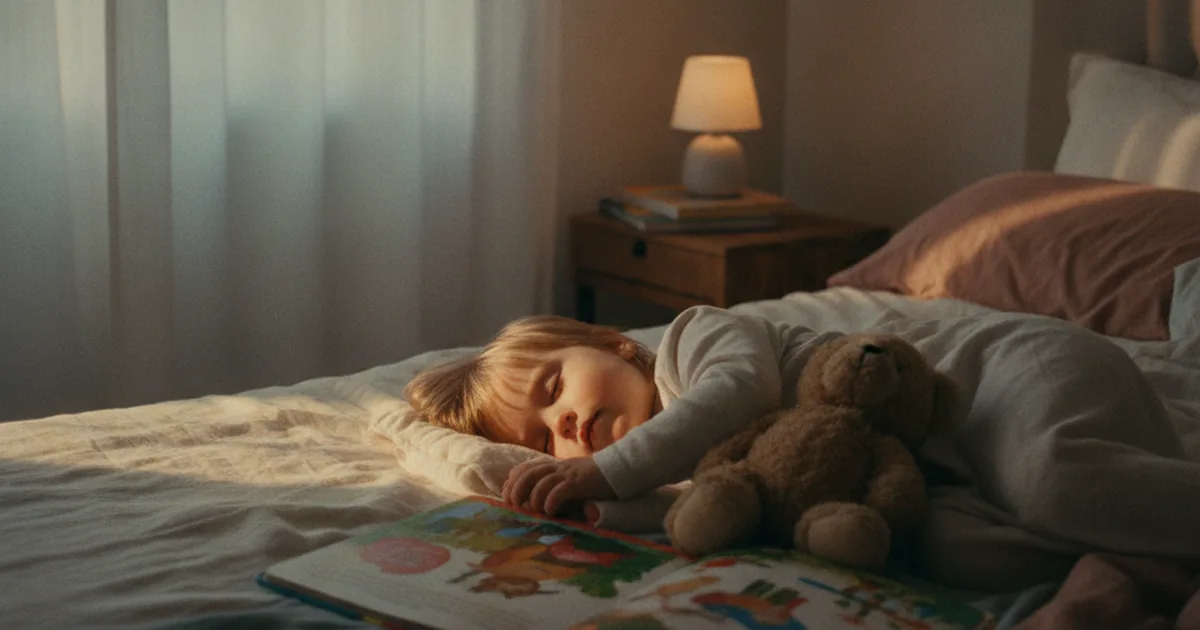
There’s a very specific kind of chaos that happens when you finally get both kids tucked in, pull the door closed, and hear giggling start up thirty seconds later. Sharing a room is wonderful for siblings in daylight — and it can turn bedtime into a nightly negotiation that leaves everyone overtired. The good news: shared-room bedtime problems are almost always structural, not a sign your kids simply can’t sleep near each other. A few changes to timing, rules, and the room itself usually fix it.
Why is bedtime harder when siblings share a room?
Two kids in one room means two sets of sleep needs, two energy levels, and two personalities all converging in the same twenty minutes. A wound-up 6-year-old and a sleepy 3-year-old going down at the same time is a recipe for delay — the older one keeps the younger one awake, or the younger one’s slower wind-down drags out the older one’s bedtime too. Add in that children are natural noise-makers when they’re not yet asleep, and even a small disturbance (a cough, a dropped stuffed animal, a whispered joke) can end up rousing a lightly-sleeping sibling. None of this means room-sharing doesn’t work — it means it needs its own routine, not just two kids following the routine you’d use for one.
Should we stagger bedtimes or do them together?
It depends mostly on the age gap. If your children are close in age and have similar sleep needs, a shared routine — bath, books, lights out together — can work fine and even becomes a bonding ritual. But if there’s more than about a year or two between them, staggering bedtimes by 20-30 minutes tends to cause far fewer problems: the younger child gets tucked in and settled first, ideally in a different space (a living room reading corner, a parent’s room) for their last few minutes of wind-down, then moves into the dark, quiet bedroom to fall asleep without an audience. The older sibling then gets a slightly later, calmer routine and isn’t walking into a room where a toddler is still wide awake and chatty.
What actually stops one kid from waking the other overnight?
A white noise machine, running all night, is the single highest-leverage tool here. It masks the small rustles, rolls, and half-awake murmurs that happen constantly during normal sleep cycles — sounds that wouldn’t wake an adult but can easily rouse a light-sleeping sibling in the next bed. It’s also worth making sure both children can already fall back asleep independently before you move them into a shared room; a child who needs a parent to resettle will end up waking the whole room every time they surface between sleep cycles, which is a much bigger contributor to shared-room wakings than the sibling noise itself.
How do we handle the “talking instead of sleeping” problem?
Pick one simple, concrete rule before bedtime starts, rather than improvising rules mid-meltdown. Something like: quiet voices are fine until the light goes off, and after that, no talking until morning. State it calmly once at the start of the routine, then enforce it the same boring way every time — a brief, unexciting reminder rather than a drawn-out conversation, which is itself entertaining and rewards the behavior you’re trying to stop. Staggering bedtimes so they’re not both freshly tucked in and wired at the same moment removes a lot of the temptation before it starts, and a quiet, individual wind-down — each child listening to their own soft Sleepy Spell story through a small speaker or on low volume, rather than a screen — gives them something calming to focus on instead of each other in those last few minutes before sleep.
What if one child is scared of the dark and the other needs it dark to sleep?
This is one of the most common shared-room conflicts, and it usually has an easy compromise: a single dim, warm-toned nightlight placed low (near the floor, not overhead) gives an anxious sleeper enough reassurance without brightening the room enough to disturb a child who sleeps better in the dark. If one child is especially sensitive to light, a soft sleep mask for that child alone lets you keep the room dark for them while leaving a gentle glow for their sibling — without turning it into a nightly back-and-forth about whose preference wins.
A sample shared-room bedtime routine that works
- Wind down together, if you can. Bath, pajamas, and teeth-brushing as a shared, calm block — the boring, predictable part of the routine is fine to do together.
- Split for the last stretch if ages differ. Take the younger child to the bedroom first for their story and lights-out, while the older child has a few extra quiet minutes reading or listening in another room.
- One story or audio track each, low volume, in their own bed. This gives each child an individual, calming focus instead of interacting with each other right before sleep.
- State the lights-out rule once, then leave. Keep your exit brief and unexciting — a long goodnight negotiation is its own delay tactic.
- Turn on white noise for the whole room, all night. Set it before you leave so it’s running from the very first minute, not just added in after a wake-up.
- Respond to overnight noise the same boring way each time. A brief, calm check-in if needed, no lights, no conversation — consistency here teaches both children that the room stays quiet and uneventful after lights-out.
Give any new routine 10-14 nights before judging whether it’s working. Shared-room habits take a little longer to settle than solo-room ones simply because there are two sets of expectations being reset at once, not one.
Is it OK for siblings of different ages to share a room?
Yes — plenty of families room-share happily across a real age gap, from a preschooler and a baby to a toddler and a school-age sibling. The main adjustments are timing (the younger child usually still needs an earlier bedtime and more wind-down help) and ground rules that flex by age — a strict lights-out and no talking for a toddler, while an older sibling might be allowed to read quietly with a small book light a little longer. Knowing how much sleep each age actually needs makes it easier to set a bedtime for each child rather than defaulting to one bedtime for the room.
When should we consider separating siblings into different rooms?
Most shared-room struggles improve with staggered bedtimes, white noise, and one clear rule, well before a room swap becomes necessary. It’s worth reconsidering the arrangement if one child is consistently and significantly losing sleep because of the other over several weeks despite those changes, or if a large age or temperament gap — a newborn and a school-age child, for example — makes shared sleep genuinely impractical for both. This is general parenting guidance, not medical advice; talk with your pediatrician if sleep loss seems to be affecting either child’s health or daytime functioning.
Frequently asked questions
Should siblings sharing a room have the same bedtime?
Not necessarily. If your kids are close in age and sleep need, a shared bedtime with a joint routine can work well. If they’re more than a year or two apart, staggering bedtimes by 20-30 minutes — younger child down first, in a different space if possible — usually causes far fewer stalls and less noise once both are in bed.
How do I stop my kids from talking or playing instead of sleeping?
Set one clear, simple rule before lights-out — for example, quiet voices are fine until the light goes off, then no more talking — and stay calm and boring when you enforce it rather than escalating. Staggering bedtimes so they’re not both newly tucked in at the same wired moment, and giving each child a low-key solo wind-down (a soft story or audio track) right before lights-out, both reduce the temptation to chat once you leave the room.
What if one child wakes the other during the night?
A white noise machine set to run all night is the single most effective fix, since it masks the small stirs, rolls, and murmurs that would otherwise rouse a light-sleeping sibling. It also helps to make sure both children are strong independent sleepers — able to fall back asleep without a parent — before moving them into a shared room, since a child who needs help resettling will wake the room every time they surface between sleep cycles.
How do we handle one child being scared of the dark while the other needs it dark to sleep?
A single dim, warm-toned nightlight low to the floor (not overhead) is usually enough reassurance for an anxious sleeper without being bright enough to disrupt the other child’s sleep. If one child is especially light-sensitive, a sleep mask for that child alone can let you keep the room dark for one and softly lit for the other without turning it into a nightly negotiation.
Is it OK for siblings of different ages to share a room?
Yes — most families room-share successfully across a wide age range, and research on shared bedrooms suggests any modest difference in total sleep time is usually small. The main adjustments are timing (the younger child often still needs an earlier bedtime) and ground rules that fit each age, such as a strict lights-out for a toddler while an older sibling reads quietly with a book light for a little longer.
When should we consider separating siblings into different rooms?
Most bedtime and night-waking struggles in shared rooms improve with staggered bedtimes, white noise, and clear rules rather than a room change. It’s worth reconsidering the shared room if one child is consistently and significantly losing sleep because of the other over several weeks despite those adjustments, or if a big age or temperament gap (a newborn and a school-age child, for example) makes shared sleep genuinely impractical for both of them.
Sources
Sleep Foundation — Having Your Own Room as a Kid May Be Worth 28 Minutes of Sleep.
Sleep Foundation — Perfecting Your Child’s Bedtime Routine.
American Academy of Pediatrics (HealthyChildren.org) — Healthy Sleep Habits: How Many Hours Does Your Child Need?.
National Institutes of Health (PMC) — The Physical Home Environment and Sleep.